Gallery
Snapshots capturing the home's thoughtful construction progress.
The complete gallery consists of over 1000 images, showing every detail. This complete gallery will be shared and presented upon request.
Foundation
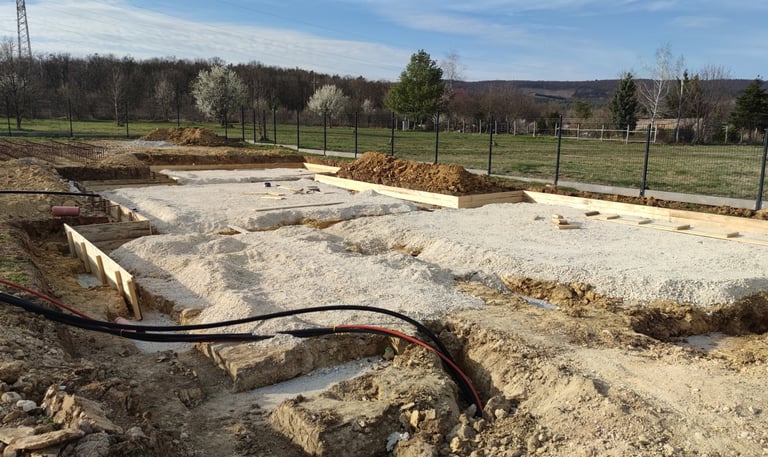
A licensed structural engineer designed all the foundation plans, based on soil core samples drilled 5m deep into the ground.
Foundation
Our building rests on 28pcs 2 meters deep concrete foundations, which are connected by rebar reinforced concrete beams.
The geotechnical engineering report and all the the structural plans will be shared on request.
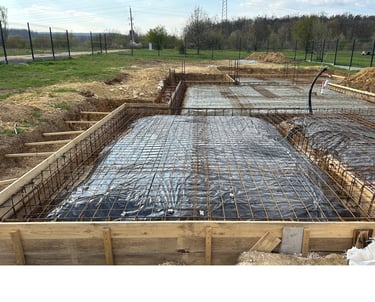
Placement of rebars and framework
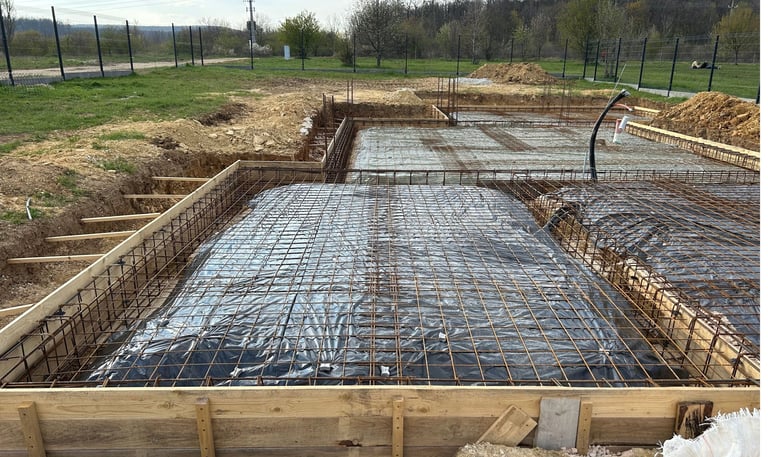
There are a few important rules about rebar tying and placement. Our Structural Engineer and Technical Manager reviewed these in person before every concrete pour. We also documented every detail in the photo gallery.


Concrete slab for gound floor complete
This was by far the biggest pour on the construction: 42m³ of C25/30 concrete went into the slab and the supporting beams.
Building the walls
Silka blocks offer exceptional load-bearing strength, excellent sound insulation, and fire resistance. It has high thermal mass for stable indoor temperatures, and an environmentally friendly composition.
Waterproofing the walls
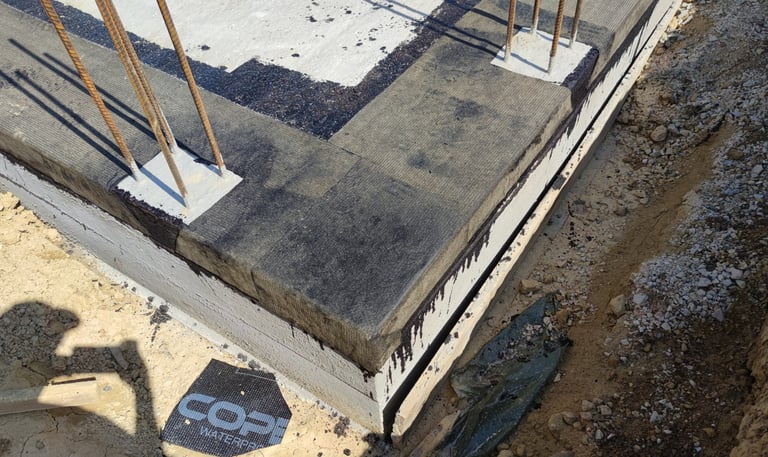
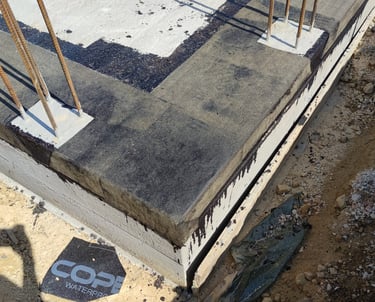
Sub-wall waterproofing is crucial because it can not be replaced later, only remedied with great difficulty and high cost. If it fails, it may cause serious structural and moisture-related damage. We used Copernit 4mm APP modified bitumen sheets. The concrete columns were protected with Ceresit CR90 crystalizing waterproofing slurry.
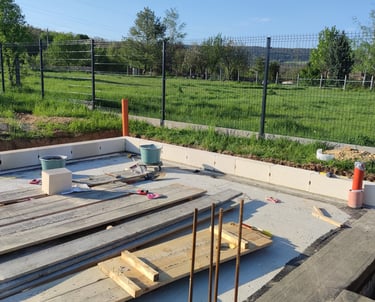
Plinth-level thermal break
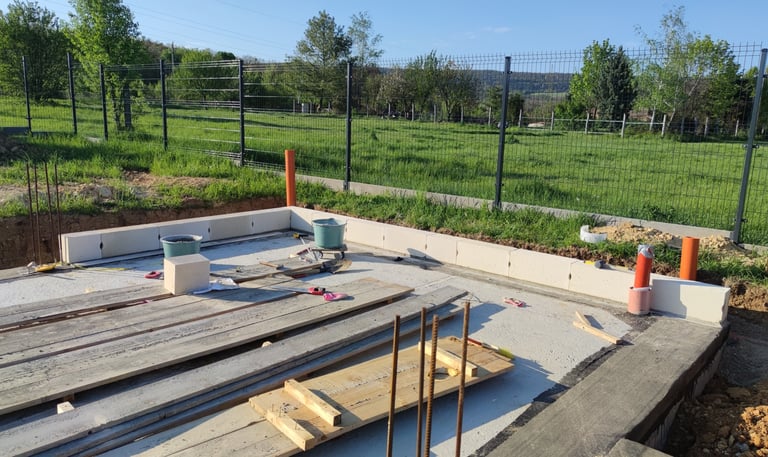
We placed the first layer of thermally insulated bricks in high strength mortar using laser leveling to achieve mm precision.
The first layer is made of special Ytong Start blocks. This greatly reduces the heat loss trough the bottom of the walls.
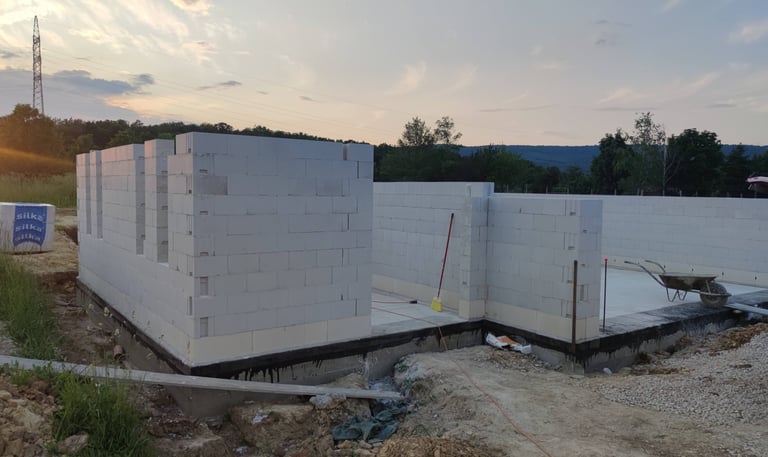
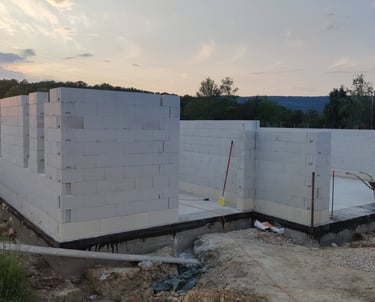
The rest of the Silka calcium silicate blocks were placed in thin mortar.
Building the walls
Concrete ceiling
A concrete ceiling provides thermal mass, and houses all the electrical, heating-cooling and AC conduits.
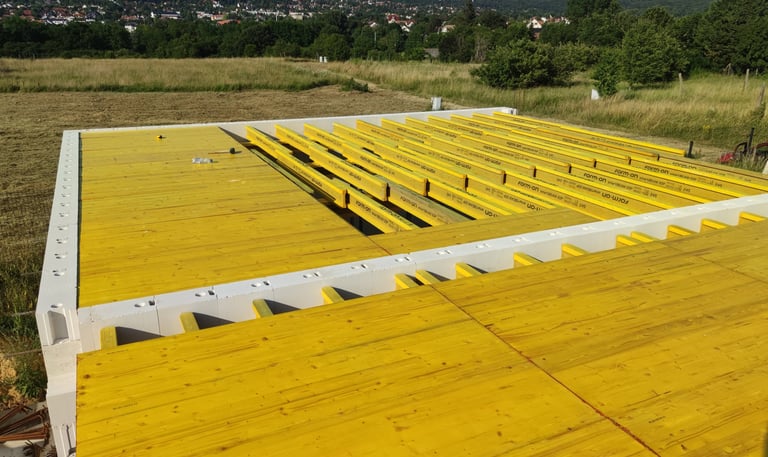
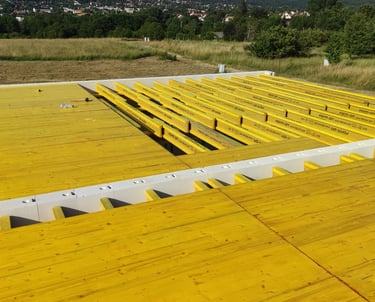
Framing Stage
Brand new framing was used to achieve a perfect ceiling surface quality.
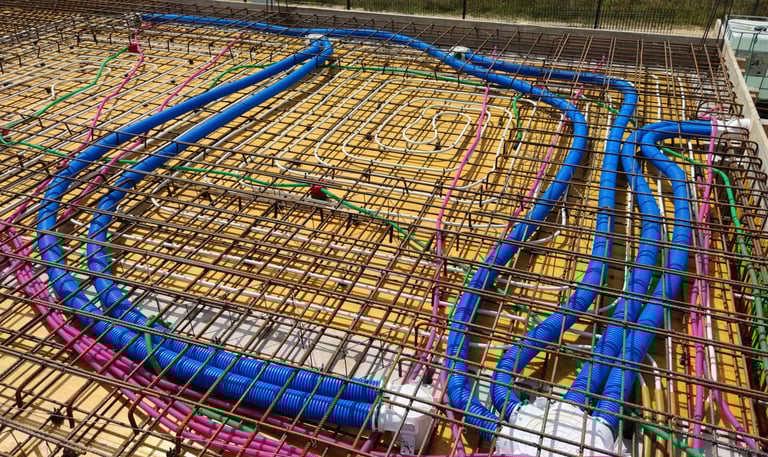
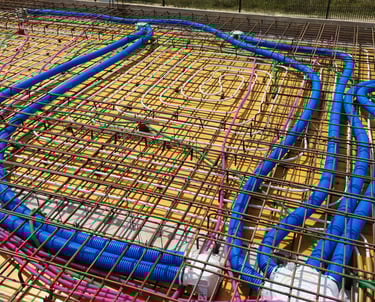
Preparation for pouring
All the rebars placed according to plans, together with electrical conduits and ceiling heating/cooling pipes. The blue piping is for ventilation. White are the heating/cooling pipes, green and purple are electrical conduits for different purposes.
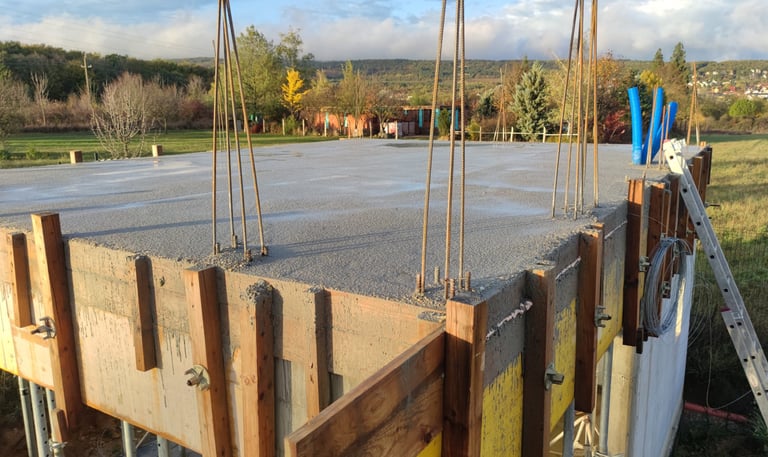
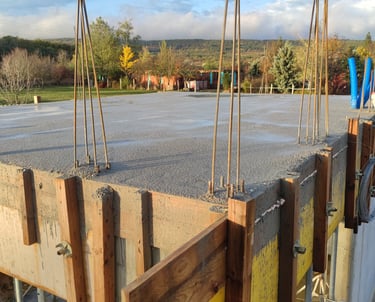
Finished concrete ceiling
The upper floor has two separate concrete slabs the are connected with massive concrete beams supporting the roof of the middle section.
Building the upper floor
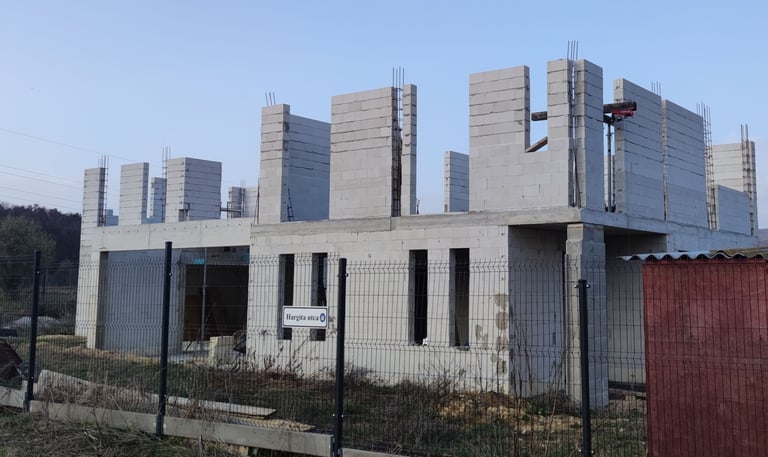
Silka blocks were used to built the upper floor and the internal walls too.
Building the walls
On the upper floor, a total of 19pcs rebar reinforced concrete columns stabilize the building. The building complies the EU EN1998-1 seismic design regulation.
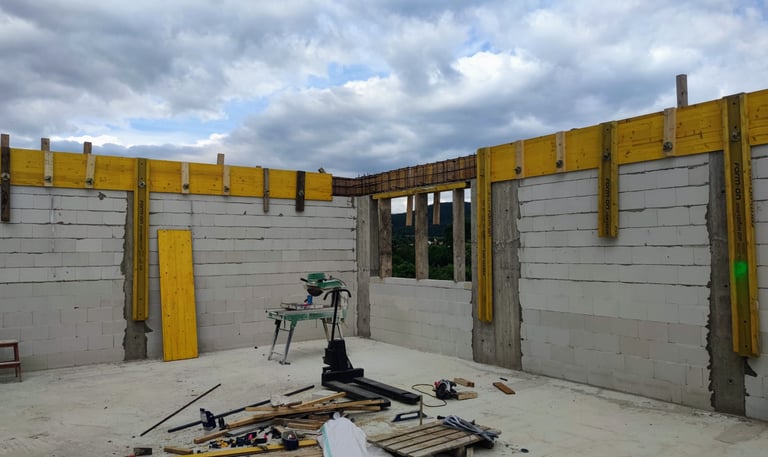
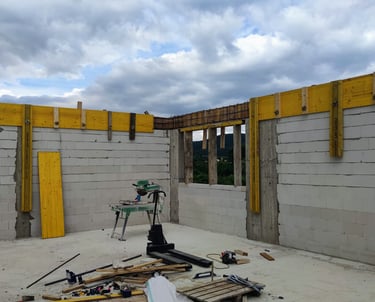
Walls finished, framework for bond beam
The bond beam supporting the walls upstairs is 40 cm high. Internal height will be 285cm on the upper floor.
Wooden structures
The building uses impressive structural wooden elements. Wood is a renewable, low-carbon material that has a timeless beauty, and a refined architectural character.
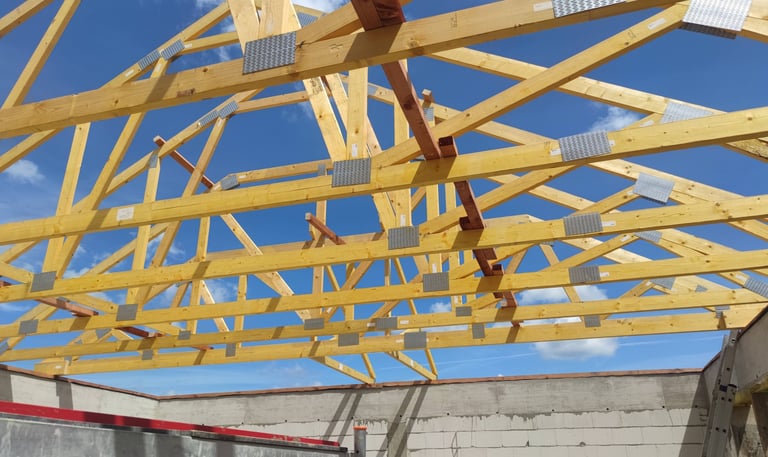
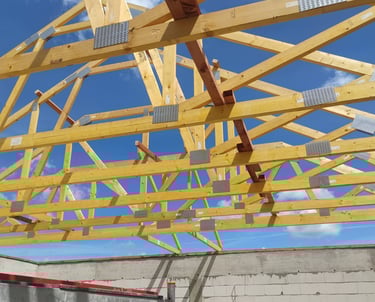
Roof framing
The roof is made of an engineered lattice structure. This provides higher stability than standard framing method, while using less material. All the wood and fasteners are certified origin and quality certificate will be shared.
This type of framing is self supporting so it does not create horizontal load for the walls.
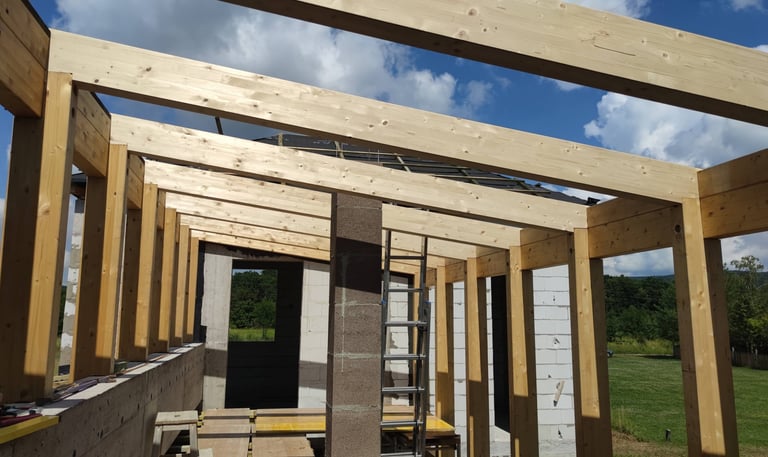
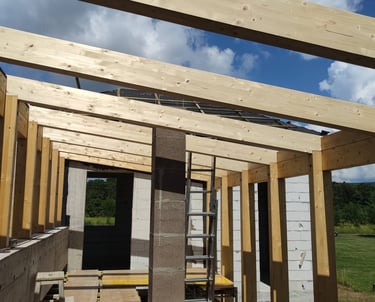
Hallway
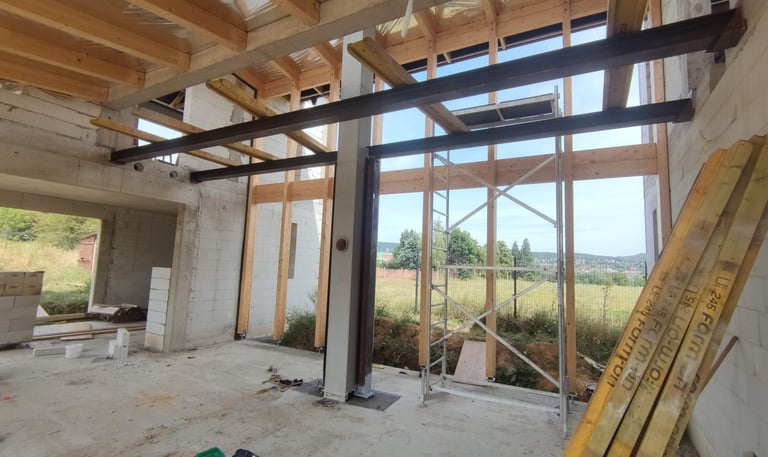
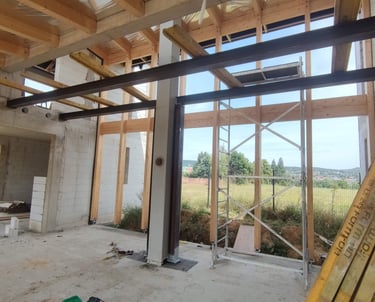
The hallway in the middle is supported by two impressive concrete lintels with a span of 7.4m.
This well-lit area allows a beautiful panoramic view on both sides to the hills of Budakeszi and the surrounding mountains of Budapest.
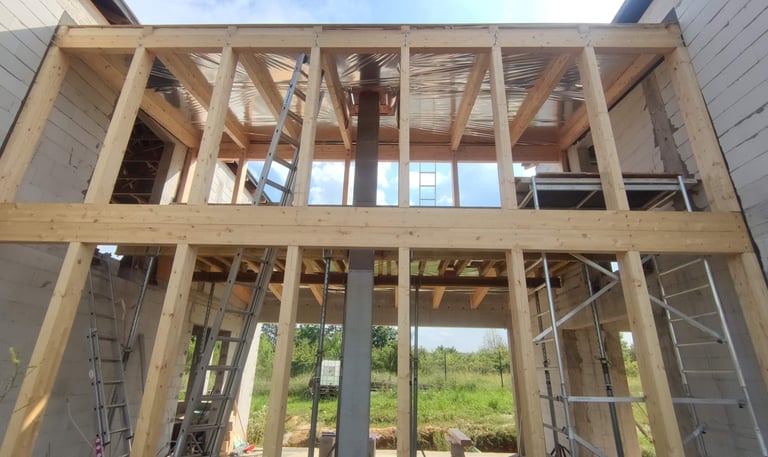
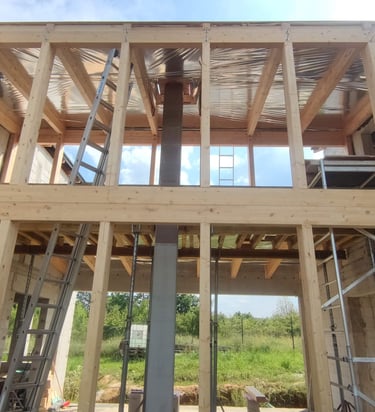
Living room
In the central area of the building, the 50m² living room is decorated with structural wooden beams, a 7m wide sliding door and a two-stories tall fixed window wall.
Roofing
We selected a roofing method that will last generations and give superior thermal insulation.
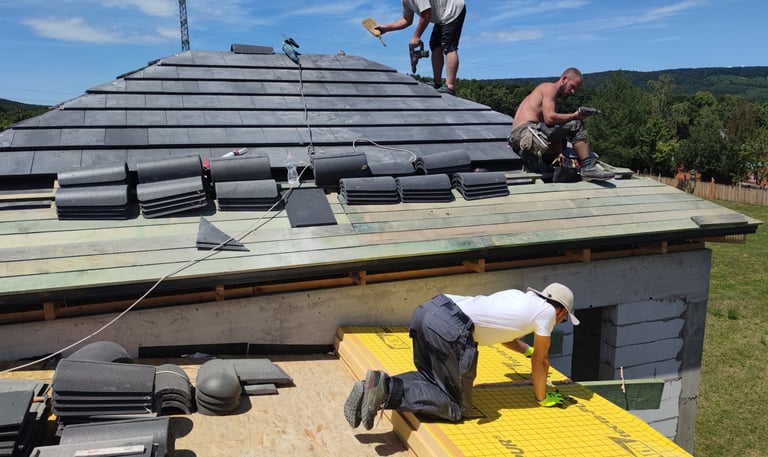
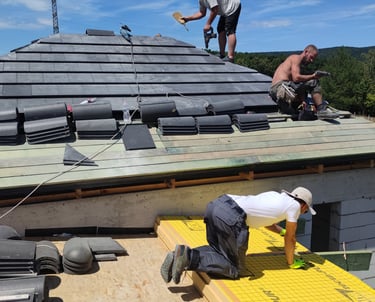
Two types of roofing
The middle part of the building is using anthracite colored metal sheets with 20cm Bachl tecta PUR insulation.
The two sides of the building are covered with anthracite colored concrete tiles. 30cm fire resistant cellulose insulation will be used here.
Chimney
An insulated ceramic chimney is built in the middle of the living room, with fresh air inlet for a classic tiled stove or fireplace.
Finishing the structure
These steps complete the structure building phase.
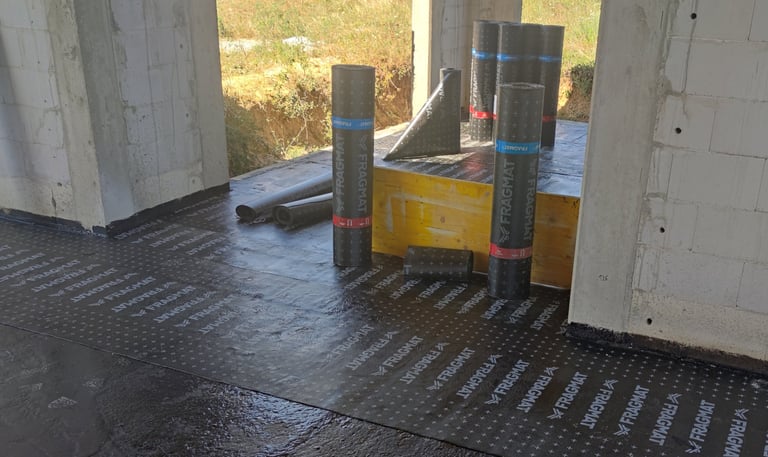
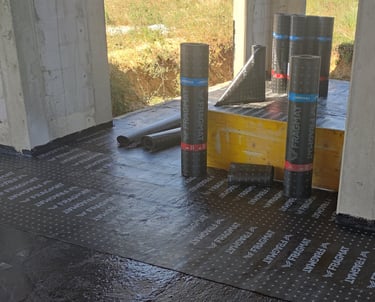
Waterproofing the ground floor
We used high quality, SBS modified bitumen based waterproofing sheets for the ground floor and the exterior walls as well.
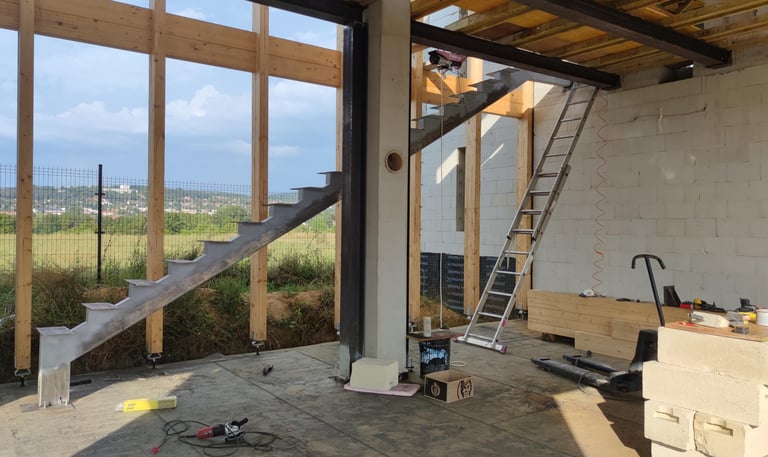
Metal structures
The hanging corridor is made of HEA160 S355J2 steel and welded on-site. The spine of the staircase is made of a 100x200x8mm rectangular hollow section.
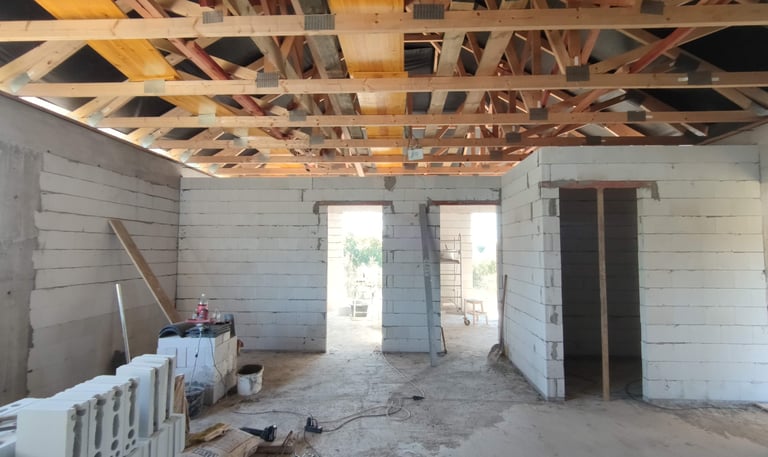
Internal walls
Rainwater drainage system
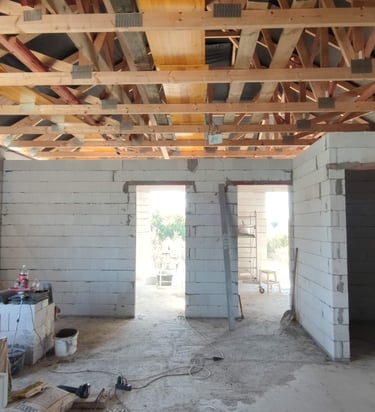
Internal walls divide the space to rooms. We used Silka blocks here too, to achieve the highest possible soundproofing.
Metal reinforcement in every second row. All internal walls are tied to load bearing walls with rebars.
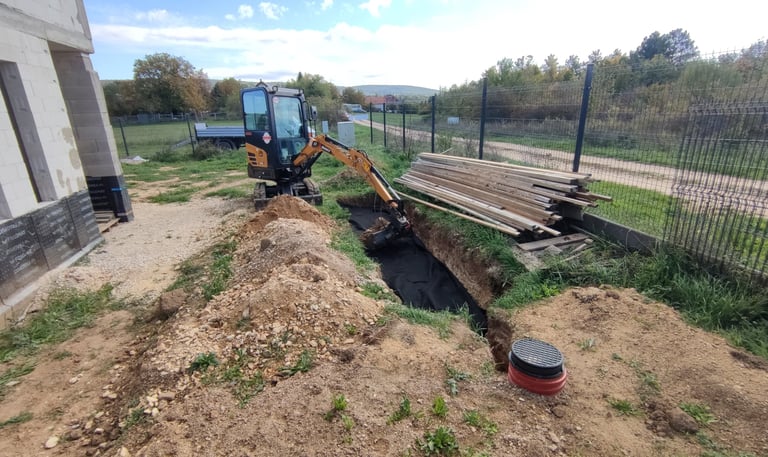
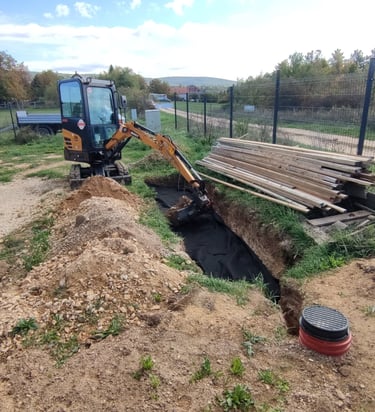
The rainwater is redirected away from the house into two underground hollow plastic cistern, surrounded by geotextile and 10m^3 of pebbles. This ensures there will be no flooding even in the case of a sever rainstorm.
Copyright notice
This website and its content are protected by copyright. Any redistribution or reproduction of part or all of the contents in any form is prohibited.
You may not, except with our written permission, distribute or commercially exploit the content.
Phone
© 2026. All rights reserved.